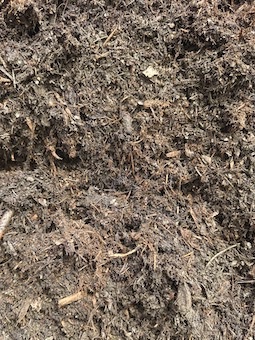
Spring Refresh: How Much Mulch Do You Really Need?
- 12 May, 25
- Admin
 |
 |


22 Feb, 2025. Sat Admin
FaqFREQUENTLY ASKED QUESTIONS
**Please have the questions listed and when clicked on, the answer drops down**
MULCH FAQ
Do you use pallets in your mulch?
No! Here at Three-Z-Supply, we use 100% natural wood and bark in our mulches!
What kind of mulch is the best?
To answer this simply, whichever one you like the most!
We recommend our Triple Shredded Organic Black Bark mulch and our natural Triple Shredded Bark. The fine texture looks great in mulch beds and the natural bark provides valuable nutrients to your soil as it breaks down.
I normally use bagged mulch. How many cubic yards would I need?
Bags of mulch typically contain 2 cubic feet of material. There are 27 cubic feet in a cubic yard, so that means 13.5 bags equal 1 cubic yard.
How deep should I install my mulch?
We recommend 2-3”. If you install your mulch thicker than that, it created a breeding ground for mold.
Are your dyed products safe?
Yes! Our dyed mulches are colored with FDA approved colorants that will not harm plants, soils, or pets.
Will dyed mulch stain my driveway?
Having dyed material dumped directly on your driveway will leave a stain. Our dyes are water soluble and any stain can be removed with high pressure water and soap. To avoid any issues, we recommend placing a tarp down on your driveway for the driver to drop material on.
Can mulch have bugs or weeds in it?
Mulch from Three-Z does not contain any bugs or weeds. During processing, the material is heated to over 140°. This process kills any plant pathogens or insects. However, after the mulch is applied, bugs or weeds may still find their way in.
What are the benefits of applying mulch?
Mulching offers several advantages for your plant beds:
Enhances the look of your yard
Reduces weed growth
Helps soil retain moisture, requiring less watering
Regulates soil temperature, keeping it cooler in summer and warmer in winter
Supports healthy plant roots
Improves soil structure and airflow
Releases nutrients as it decomposes
Protects tree base
Should I remove old mulch before installing new material?
It depends. Not all mulch breaks down the same way. Dyed wood mulch, such as our color black and brown, decomposes slowly and may deplete nutrients from the soil instead of adding them. Piling wood mulch on top of old wood mulch can create a thick layer that prevents water and oxygen from reaching plant roots. Over time, you may need to remove older layers before adding fresh mulch to keep your plants healthy.
If layering new bark mulch (Our Triple Shredded Organic Black Bark, Triple Shredded Bark, or Custom Z) over old mulch, the bottom layer will continue breaking down naturally while the new bark mulch on top looks fresh and clean
How do I stop my mulch from blowing away?
Mulch typically doesn’t blow away, though it may seem like it does. In reality, it gradually breaks down over time. Sun exposure causes mulch to fade and decompose into fine particles until it eventually blends into the soil.
When should I install mulch?
Whenever your yard needs a face lift! We recommend installing mulch in May so your yard looks great all summer long.
If dyed mulch has been delivered and rain is expected, do not spread the mulch. Cover it with a tarp until there will be 24-48 hours of no rain. Think about spreading mulch like painting a fence or your house. You wouldn’t paint if it’s going to rain!
If possible, you should try to find a window of no less than 24 hours of rain free weather as critical drying time is needed.
Avoid exposing dyed mulch to watering/sprinklers for 24-48 hours after applying mulch to your landscaping.
My mulch color faded out. How can I fix this?
If mulch color fades off, there are simple ways to fix it.
If your material is still in a bulk pile: Mix the washed mulch with the rest of the pile. Since the color loss is only on the surface, the fresh mulch underneath will blend in, preventing any noticeable difference.
For applied mulch: You have two options:
Rake the surface – Since color fading usually affects only the top half-inch, lightly raking will reveal the richer color underneath.
Add a thin layer of fresh mulch – Spreading an additional half-inch of new, color-enhanced mulch will restore its vibrant look.
What is that growing out of my mulch?
If you see something unusual growing in your mulch, it's probably a type of fungus. Warm, moist conditions help fungi grow as the mulch breaks down. These typically occur in areas where there is not a lot of sunlight to dry out the mulch after rains or where you install mulch to thick. Here are some common ones:
Mushrooms or toadstools – Vary in shape, size, and color but can be easily removed.
Slime molds – Commonly called “Dog’s Vomit”. It looks unpleasant but are harmless and go away on their own. You can remove the affected area if it’s unpleasant to look at
Bird nest fungus – These are harmless, tiny, grayish-brown growths that look like bird nests and spread in mulch. They are very interesting to look at but can be easily removed.
Artillery (shotgun) fungus – Rare but can shoot spores that stain surfaces. Remove it immediately if found.
For a mold-resistant option, use our Cypress Mulch
SOIL FAQ
Why does my soil have stones in it?
All soil contains small rocks in it. We screen our soil through a ¾” screen so small stones get through the screen. These are actually beneficial to have in the soil! Do not remove them as the stones provide texture and pore space to the soil, which is beneficial for growth!
What does good soil texture look like?
If your soil has the right texture, you should be able to squeeze it into a ball and easily break it apart.
There should be a mix of particle sizes, like small stones or sticks, which create spaces for water and air to move through.
Clumpy soil isn’t necessarily bad, especially during rainy seasons. We store our material under a hoop house, however in periods of prolonged rain, soil can be a bit wetter than we’d like. The increased moisture causes the particles to stick together, but they should be easily broken apart when it dries.
To improve soil texture and fertility, Three-Z offers products such as Leaf Humus, Sweet Peet, concrete sand that can be blended into your soil.
Are all soils the same?
No! We offer a variety of soil blends with differing texture and fertility to cater to any application. We perform lab testing on our soil, so if you have any questions about its contents, please contact our office.
Is there manure in your soil?
Soil from Three-Z does not contain any manure. However, we do offer products such as Leaf Humus and Sweet Peet that can be blended into your soil to improve fertility.
STONE FAQ
Is stone a good alternative to mulch?
Many homeowners prefer decorative stone to mulch for their planting beds. Although it costs more upfront, stone is a durable alternative that doesn’t need frequent replacement. Three-Z offers a wide selection of decorative gravels in various colors and sizes to complement any landscape. While the stone may need some slight refreshing every 3-4 years, its longevity makes it a cost-effective choice in the long run. In 2 to 4 years, the expense is typically recouped, making it a smart investment.
Should I use Limestone or Gravel?
Limestone is whitish-gray in color with jagged corners and edges. It should be used as a base for concrete/asphalt or for driveways/parking areas. It is not typically used as a decorative stone for planting beds in your yards. Washed gravel on the other hand, had smoother, rounded edges that come in a variety of color ways. It should be used as a decorative ground cover, or as backfill in waterproofing applications.
My gravel was delivered and is dirty. What do I do?
These are naturally occurring products that are washed during processing; however the wash is not 100% effective and your gravel may have a slight film of dirt, sand, or white limestone dust on them when delivered. You may need to rinse them down after application or just wait for Mother Nature to rinse it off for you!
MATERIAL PICK UP FAQ
How do I pick up bulk material?
Either park your vehicle in the parking lot and come into the yard office or pull up to the service window to speak with one of our team members. We can help you determine which product you need and how much. You’ll be rung up and then asked to pull around to the where the materials are located and one of our loader operators will load your truck.
What kind of vehicle can you load?
Bulk materials can be loaded into any open-bed vehicle or trailer. We cannot load vans, moving trucks, or anything with a cover on top. Three-Z is not responsible for any damage that may occur to your vehicle while loading.
Can I load up my own buckets or bags of material?
You are more than welcome to hand-load your own buckets or bags of material with shovels provided around the yard. If you need a container, we offer bags in the sales office.
How much material can my pickup truck hold?
A small pickup truck (ex. Ford Ranger) can hold 1 cubic yard of mulch, a ½ cubic yard of topsoil, or a ½ ton of sand or gravel. A full size pickup truck (ex. F150, ¾ to 1 ton pickup) with a full size bed can hold 2-3 cubic yards of mulch, 1-2 cubic yards of topsoil or 1-2 ton of sand or gravel. It is your responsibility to know your vehicle and what its weight limit is.
DELIVERY FAQ
If you have questions about material delivery, please see our delivery page
If you have any other questions, feel free to give our office a call at 216-524-4544!
PAYMENT METHODS PAGE
PAYMENT METHODS
At Three-Z, we accept all major forms of payment, including credit cards, debit cards. However, due to increased costs from processing companies, a 2% fee applies to credit card transactions. To avoid any processing fees, we gladly accept cash or checks for pick up or to be collected upon delivery. However, any returned checks will incur a $25 NSF fee.
Continue Reading
12 May, 2025. Mon Admin
Spring Refresh: How Much Mulch Do You Really Need?Mulch is typically sold by the cubic yard, with each yard covering approximately 100-150 square feet at a 2-inch depth (the recommended thickness for most applications). For new beds, you might want to go a bit deeper—around 3 inches—while established beds often only need a 1-inch refresh.
For weed suppression and moisture retention, you really want at least 2 inches of mulch. Less than that, and weeds can still push through. More than 4 inches, and you risk suffocating your plants.
Before you order, you'll need three measurements:
For circular areas like tree rings, measure the diameter (the distance across the circle) instead. Our coverage table for round areas makes this calculation even simpler.
Most people just eyeball their measurements and end up way off. Taking 10 minutes to measure properly can save hundreds of dollars on your next big project.
Three Z Supply offers a comprehensive calculator on our website that takes the guesswork out of ordering. Simply input your measurements, and it will tell you exactly how many cubic yards or tons you need.
For quick reference, our coverage tables can be incredibly helpful:
For stonework, remember that materials are sold by the ton. A good rule of thumb: multiply cubic yards by 1.4 to determine tonnage. Also keep in mind that larger stones require thicker applications—you can't create a 1-inch layer using 4-inch stones.
Planning to move the mulch yourself? Our coverage tables also include wheelbarrow estimates. For example, 3 cubic yards of mulch typically requires about 15-21 wheelbarrow trips from your driveway to your garden.
Most residential wheelbarrows hold about a third of a cubic yard when fully loaded. Knowing this ahead of time helps customers plan their weekend projects more accurately.
Our Northeast Ohio climate presents unique challenges. Heavy spring rains can compact mulch, while our harsh winters can break down organic materials faster.
In this region, hardwood or bark mulch is recommended for most applications. It holds up well to our weather extremes and doesn't float away during heavy rains like some lighter mulches might.
With Three Z Supply's calculator and coverage tables, you can order with confidence knowing you'll have exactly what you need for your spring landscape refresh. Simply click on our calculator image on the website to determine your precise needs, or reference our comprehensive coverage tables.
If you're still uncertain, our team is always available to help with calculations. Just give us a call at 216-524-4544, and we'll walk you through the process.
Ready to refresh your landscape? Visit our calculator page How Much to Order - Three Z Supply Inc. and place your order today for quick delivery throughout Independence and surrounding Northeast Ohio communities.
Continue Reading